

In today’s post-production environments, teams are navigating large volumes of digital media data stored across distributed locations, formats, and systems. As projects scale and timelines tighten, the ability to quickly find the right content without sifting through massive files or downloading unnecessary footage has become a competitive advantage. Keeping up with these demands are those who harness the power of searchable media metadata.
But what does it actually mean for metadata to be “searchable”? And how can post-production teams ensure that their metadata isn’t just stored, but usable?
Intelligent Search from Metadata

Metadata is the connective tissue of every production. It’s what turns folders full of files into meaningful, discoverable assets that teams can actually work with. Whether metadata is added by a camera, a transcoding system, or through editorial input, it only becomes valuable when it’s indexed and searchable. Without that layer of intelligence, metadata remains trapped in storage—unavailable to those who need it most.
Editors might tag clips manually, or metadata might be extracted automatically by cameras or transcoding systems. But unless this information is indexed properly and connected to a searchable system, it sits idle. Modern production teams use metadata search for assets in a fast-paced environment.
To make metadata truly searchable, you need infrastructure that goes beyond storage. This means implementing systems that can ingest, normalize, and index media assets across all your storage — whether on-premises, in the cloud, or in hybrid environments. Media asset indexing is what transforms raw metadata into something useful: a catalog that allows users to search by filename, codec, resolution, in/out points, or even custom-defined fields
Discover How You Can Use Signiant to Connect, Search, and Act Across Your Storage.
Unlocking Workflow Speed with Searchable Metadata
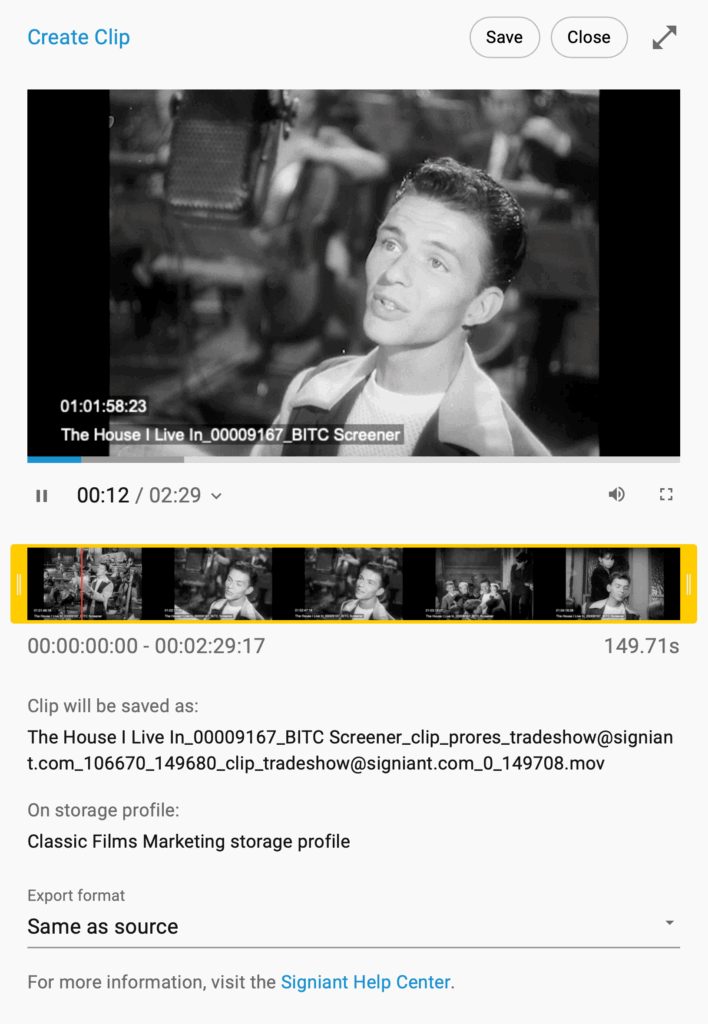
The real value of searchable media assets lies in workflow acceleration. Instead of dragging through footage or relying on folder structures, post-production teams can use metadata search tools to instantly surface the files or clips they need.
Take for example the challenge of pulling a single soundbite or shot from a longer media file. With traditional workflows, this might require downloading the entire file, previewing it in a local editing system, and manually trimming it down. But with the right metadata infrastructure in place, users can isolate a searchable video clip directly from the indexed metadata and retrieve only the portion they need. This process is known as partial clip retrieval.
This isn’t just a quality-of-life improvement. It significantly reduces bandwidth usage and cloud egress costs, accelerates turnaround time, and minimizes storage duplication across teams.
The value of searchable media assets lies in workflow acceleration. Instead of dragging through footage or relying on folder structures, post-production teams can use metadata search tools to instantly surface the files or clips they need.
Federated Search: One Interface, All Your Media
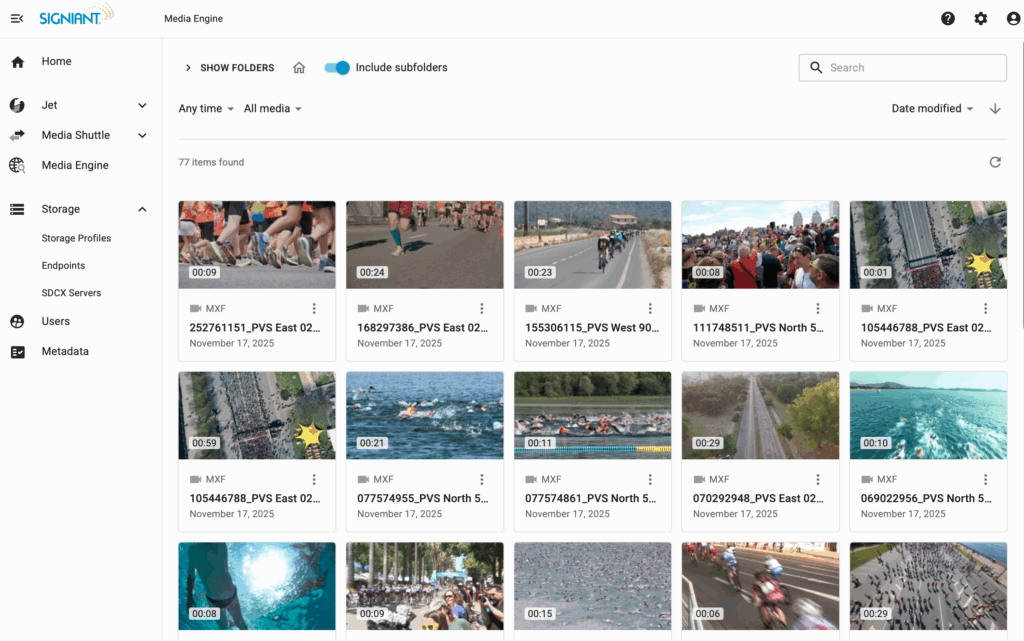
In distributed post-production environments, it’s rare for all media to live in one place. Editors, colorists, producers, and VFX teams often work across different time zones and storage types. That’s how federated search models, like Signiant Media Engine’s global search functionality, offers an approach that allows users t query all connected storage environments from a single interface, regardless of where the actual files reside.
Searchable metadata becomes even more powerful in a federated model. When systems like Media Engine indexes metadata across your storage landscape, users can search for a clip, preview it in context, mark in and out points, and retrieve what they need without manually logging into separate systems or initiating full file transfers.
Why Metadata Strategy Matters
The importance of metadata in post-production is no longer theoretical. It’s operational. As the volume of content continues to explode and remote collaboration becomes standard, searchable metadata is no longer a nice-to-have, it’s essential infrastructure.
By investing in systems that support comprehensive media metadata search, teams gain not just better organization, but tangible workflow speed, cost savings, and creative flexibility. Turn your static metadata into an actionable asset across all teams.
Ready to put JSON metadata to work?
Learn how Signiant can help you simplify and automate your workflows.