Building Trust Through Workflow Design on a High-Stakes Sky Production
10 min read
A Big Leap, Taken at Full Speed
When a new dailies company lands its first major studio contract, it’s a big moment, and there’s no easing into it. Already high expectations seem even higher, deadlines more immovable, and the need to be reliable, paramount.
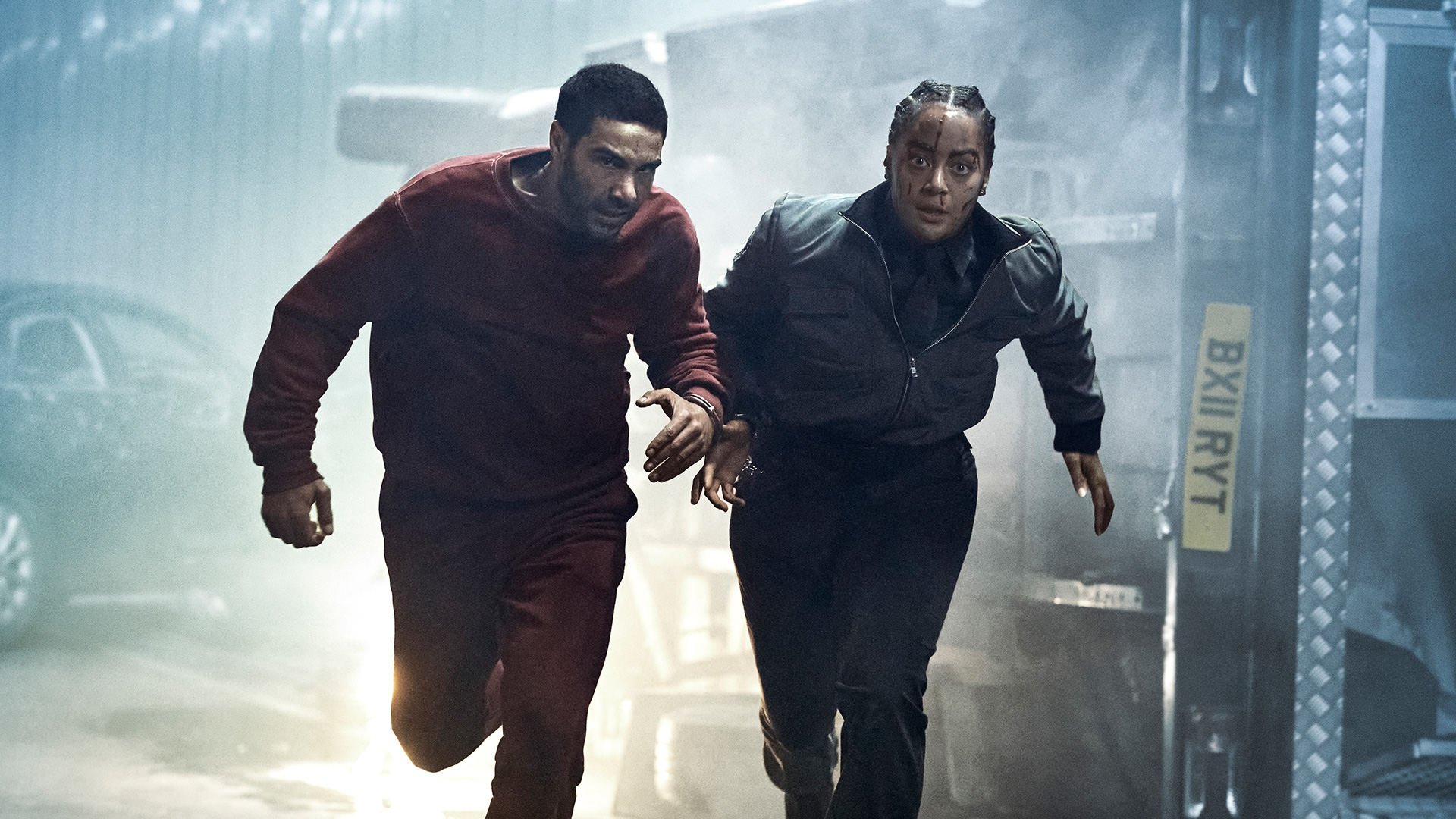
For Howard Colin, Pixel & Process CEO, and his small South Wales team, being selected to support Prisoner, an upcoming production for Sky, represented exactly that moment. For Howard, it was validation of what he’d been quietly building for years, and a test of whether a lean, technically focused operation could deliver the same confidence and performance expected from much larger post facilities.
“The goal was always to offer dailies and intermediate post. When we got the contract with Sky to work on Prisoner, it was a big leap for the company.”
With multi-camera shoots and overnight dailies deliveries, the work demanded speed, flexibility, and absolute trust in the underlying workflows. To meet those expectations, the team relied on careful planning, a clear division of responsibilities between set and lab, and a file transfer platform they could depend on when the pressure was highest.
From Technician to Founder
Howard’s path into post production was shaped by curiosity and problem-solving rather than titles or prestige.
“I started out as a camera trainee in 2012 and worked my way through the camera department,” he said. “I jumped off the traditional path around 2018 to [be a] DIT because I enjoyed the technical side of things and workflow processes.”
As a freelancer, Howard often joined productions where infrastructure already existed. Storage, content pipelines, backup strategies, and escalation paths were usually someone else’s responsibility.
But as he moved between productions and locations, he noticed a growing gap, particularly in Wales. Productions were becoming more complex, camera formats varied, and expectations around how quickly footage needed to reach editorial was growing. Yet there were no local intermediate post services that could reliably shrink the time between set and post.
“I saw an opportunity to build something that sat between on-set DIT and larger post-houses,” Howard explained. “Something closer to production, but with the discipline and structure of a proper lab.”
When the company launched in 2020 with just two people, what had once become someone else’s infrastructure problem was now entirely his. He needed resilient transfer pipelines, clear delivery workflows, and support he could trust.
Choosing a Content Pipeline They Could Trust
With his new company’s reputation riding on providing overnight content delivery, file movement wasn’t something Howard could afford to improvise. What might have been acceptable on smaller projects simply wouldn’t hold up under the pressure of a high-profile Sky series.
Howard had first looked at Signiant for his content pipeline in 2023 on a smaller project and was impressed by the technology. As the Prisoner opportunity came into focus, he revisited the platform, this time with far more at stake, and began comparing it seriously against other options.
“We used some cloud-based [transfer] solutions before,” Howard recalled. “But they weren’t industry standard or accepted within the realm of studios we were trying to work with.”
At that point, Howard wasn’t just buying a file transfer tool, he was selecting infrastructure his business could depend on. He needed a platform that could support the way the company actually worked, not one that introduced cost or operational friction as volumes scaled.
Specifically, Pixel & Process needed:
- Fast and secure content transfer
- Industry acceptance from studios and post houses, not just technical capability
- Reliable performance for tight editorial turnaround
- Flexibility to support multiple storage locations and workflows
- Predictable pricing that made sense for moving large volumes of data regularly
- Clear escalation paths and responsive support when issues arose
“We knew we needed a platform to do this line of work, and we took our time selecting,” he said.
That evaluation ultimately led him back to Signiant. From a value perspective, the decision was clear.
“I always try to look at things from a value perspective,” Howard says. “It’s X amount of money, but how much value is it going to bring? Signiant is a major value add.”
With straightforward onboarding, flexible architecture, and a pricing model aligned with real-world production volumes, Signiant provided the confidence Howard needed to support Prisoner.
Designing Prisoner’s Workflow
But Howard knew he needed more on Prisoner than accelerated content flow. It was also necessary to have a secure, efficient, and reliable pipeline in place before the first camera card was offloaded.
While most days Prisoner was a two-camera shoot, some days expanded to three, four, or even five cameras across multiple units. Primary cameras included ARRI systems shooting ARRI RAW, OpenGate, and Alexa 35, with drones and other secondary cameras introducing additional variables. That made for scaling yet maintaining security and dependability critical.
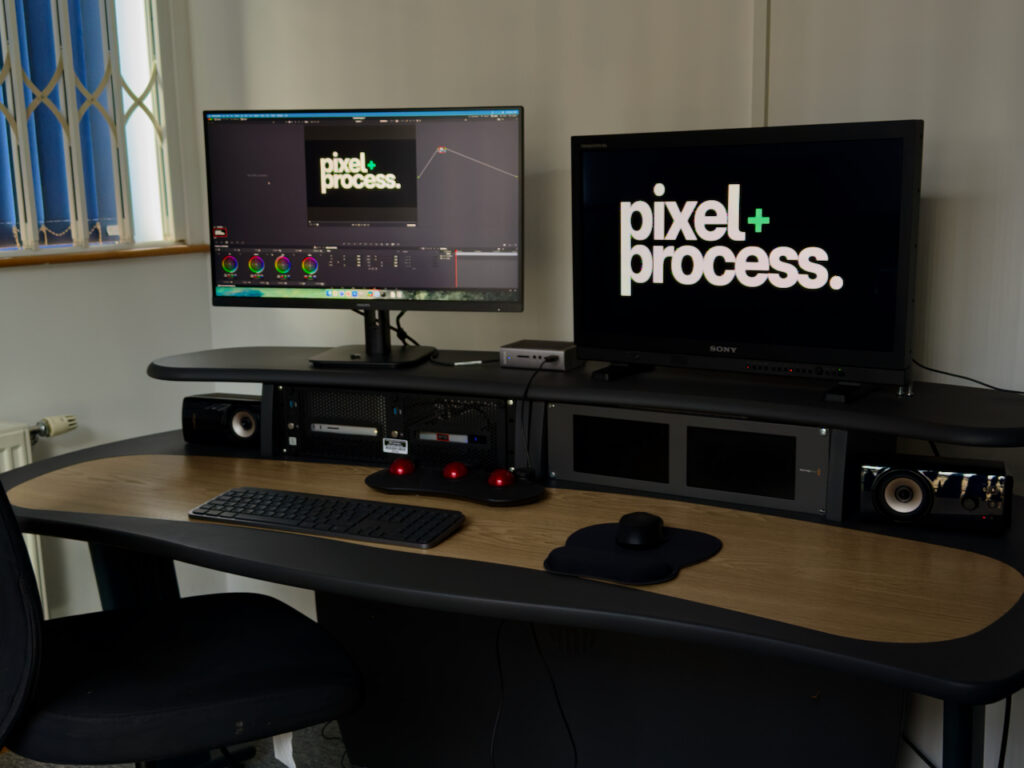
One of the defining requirements of the workflow was a deliberate split between on-set responsibilities and overnight processing. Will Cook, Pixel & Process DIT, handled the on-set DIT role, focusing on data management and live color to keep the shoot moving efficiently during the day, while Howard took over once media arrived at the office.
“The media would come in, and we’d run an overnight lab service where we were doing the heavy lifting,” he said.
That included transcodes, Avid syncs, metadata handling, dailies generation, final packaging for editorial, and archiving. This removed the burden of complex technical problems, solving from set to freeing the DIT to focus on the DP.
For Prisoner, the lab model introduced its own set of challenges. The team needed to move large volumes of content quickly and reliably between South Wales and London, often processing up to five hours of media overnight so editorial could begin work first thing in the morning. On average, four to five terabytes were processed each night, with heavier shoot days pushing that amount even higher
Secondary cameras added further complexity, particularly drone footage captured in ProRes RAW, which didn’t integrate cleanly with DaVinci Resolve at the time.
“We ended up having to make mezzanine codecs and doing color space transformations to bring everything into Resolve,” Howard noted. “The challenge was integrating everything into a unified pipeline and doing it quickly for turnaround.”
Flexibility When Things Go Wrong
Signiant’s great benefit is its flexible extension of their customer’s brand. The team branded separate Signiant portals by production, while also maintaining a company-wide portal when needed.
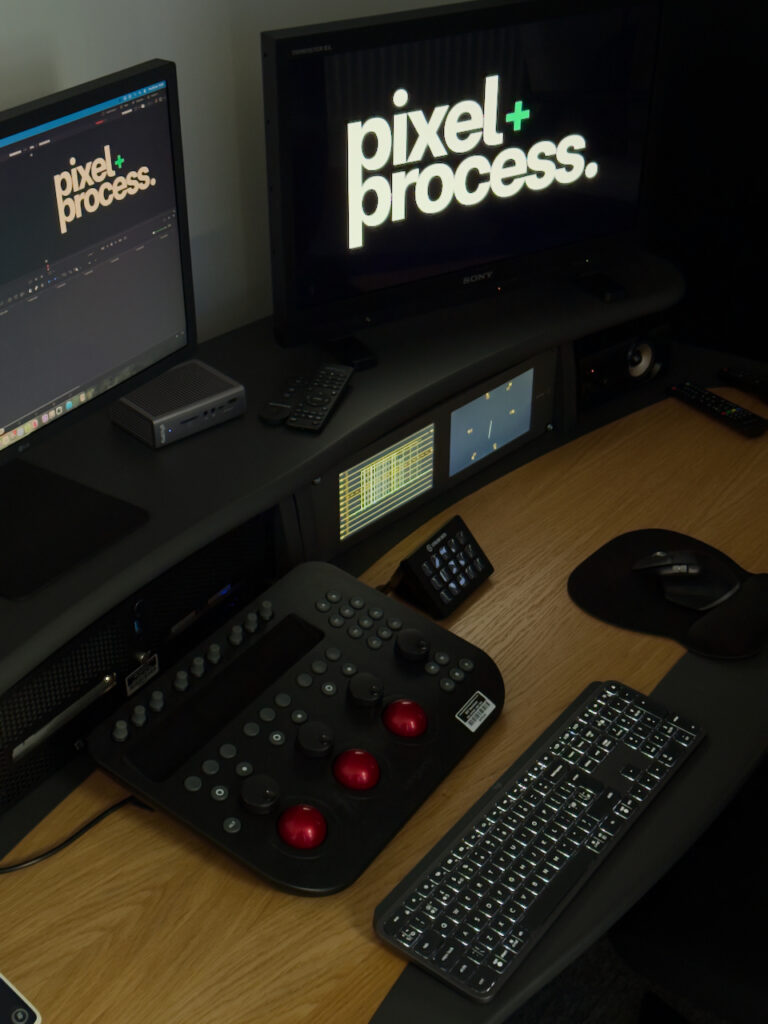
“And having portals with different storage endpoints is a big value plus,” Howard says. “For the client, there’s only a slight difference — but behind the scenes, you’ve got time to actually fix it if something goes wrong”
Signiant has always remained storage agnostic, meaning assets always flow directly into and out of customer’s storage, whether file or object storage, on-prem or in the cloud, or a combination.
That ability to reroute workflows without disrupting production proved critical when things didn’t go as planned for Pixel & Process.
“A power supply shorted and tripped one of our UPS—the SDCX server went offline,” Howard says. “We lost our RAID server basically.”
Because they had a cloud server configured as a work-in-progress backup within Media Shuttle, the team was able to continue operations and recover quickly.
Reliability & Acceleration
In addition to flexibility and storage independence, equally as important is the acceleration and reliability of the Signiant Platform.
Howard recalls one instance on set of Prisoner, “One camera was a DJI, shot with a deliberately grainy aesthetic. DIT Cook quickly noticed some dead pixels or artifacts and reported the issue back to the lab.”
Using Signiant, the team transferred the card off the set that very night and sent the camera roll straight to their storage, then on to the finishing house. Reliability is baked in at every layer of Signiant, from transport acceleration to user experience. Howard had real-time visibility into the transfer of the shot and was able to jump into action as soon as it landed in their lab.
“They gave us the all clear within a few hours,” Howard says.
That rapid escalation avoided what could have been major schedule and budget implications.
A Foundation for Growth
By the end of their work on Prisoner, the results spoke for themselves.
“I can trust Signiant to do what it’s supposed to do,” Howard said. “From that foundation, we can build further and integrate more into our network.”
Pixel & Process is continuing to grow, with a new storage server installation planned, and internet connectivity upgraded to a two-gigabit pipeline.
“Scaling our operations with Signiant makes everything possible,” he says. “Signiant gives us the capabilities that we need to grow.”
“When I think about Signiant, I think about how well it did on Prisoner—and that foundation of trust.”
For Howard and his team, Prisoner wasn’t just another job. It was proof that a small, agile operation could deliver studio-grade workflows without compromise.
By combining clear planning, disciplined lab processes, and a trusted file transfer platform, the team built confidence not just with their clients, but within their own growing operation.
In an industry where time is unforgiving and failure is highly visibly, trust means everything, and for this young company, that trust becomes the foundation for what comes next.
Explore More Resources
View All
5 Bottlenecks That Slow Down Corporate Video Teams - And How to Fix Them
Signiant Scales OUTtv’s Global LGBTQ+ Storytelling