Your Content is a Mess, Not a Problem
Stop trying to consolidate it. The advantage goes to whoever can reach across it, wherever it lives.
The Fast Take: Every media vendor now promises to connect you to your content. The test that decides value isn’t whether the content stays in place — it’s whose place it stays in: your storage and your tools, or the vendor’s.
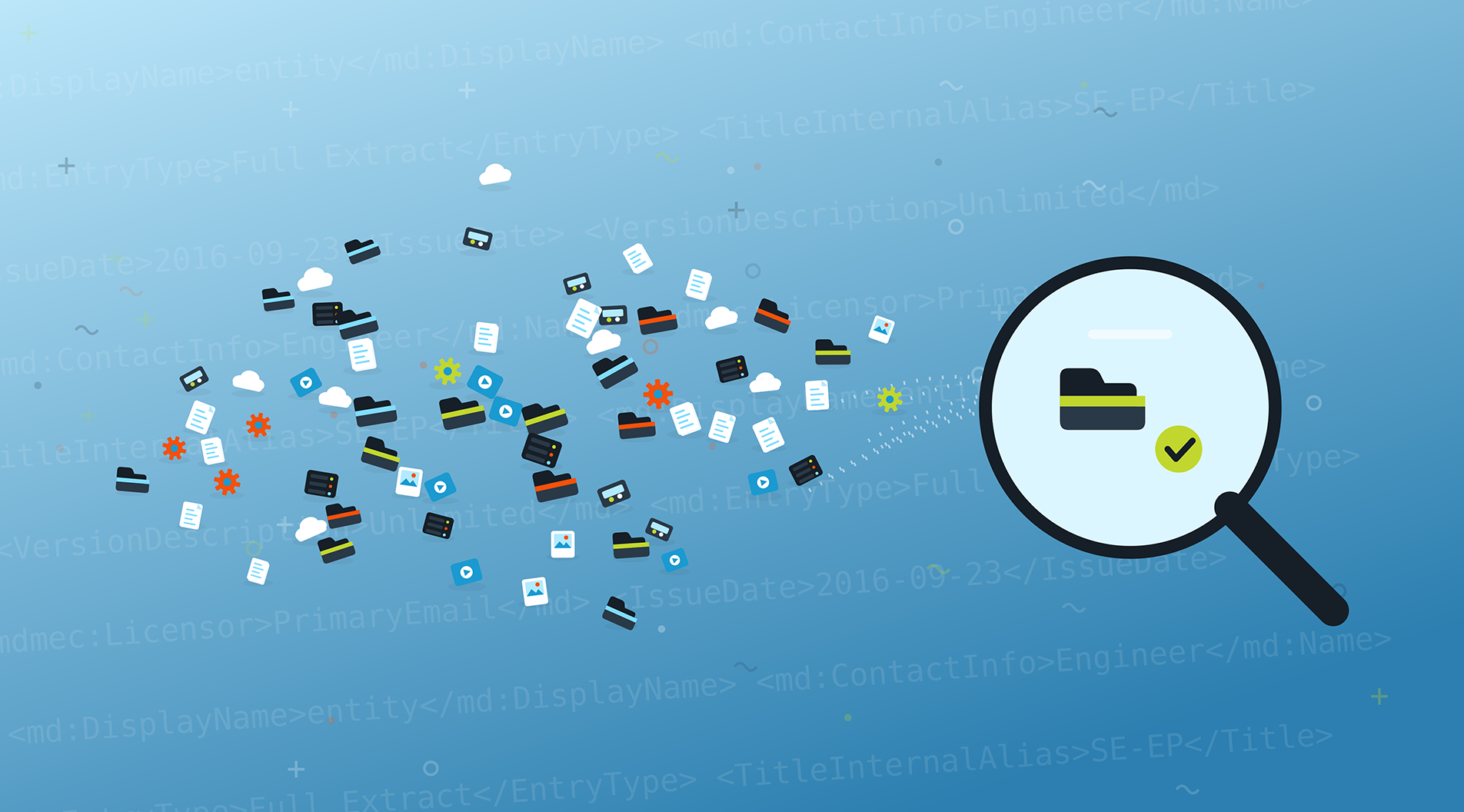
Your content is a mess. Even companies with the most stringent organizational protocols still struggle to know what they have, where it is, and how to make it usable. Consolidations, mergers, migrations, and technology changes have all added to the complexity. Masters, dailies, proxies, and finished deliverables scattered across on-premises storage, a few clouds, partner systems, and the “temporary” storage someone stood up for a production three years ago and never turned off.
The instinct is that everything needs to come under one roof. But after years around this problem, I have landed on a different position: the mess is not the thing to fix — trying to consolidate your way out of it is. What actually costs you is not the sprawl, it is the friction on top of it. Every vendor shows up with the same promise to connect you to your content. It is the right promise. It is also getting harder to pin down, because so many now make it.
The industry already agreed the content should stay put
On the biggest question, there are definite trends showing content movement slowing. The prevailing blueprint for modern media workflows, the MovieLabs 2030 Vision, makes it a founding principle: applications come to the media, in a world where files are moved “only for convenience, not necessity.” Content should be worked on where it sits, not shuttled between tools.
Signiant’s own platform shows this happening across the M&E organizations on its network, the number of files the average customer moves has held essentially flat since 2022 even as the size of that content has climbed — fewer, heavier moves, not more of them.
So what actually differs? Whose place.
If everyone connects to your content in place, the question that matters is a narrower one: in whose place? You may feel you have already solved this. You run a hybrid; your tools reach your storage. The real question is whether that reach is yours or rented. “In place” turns out to describe several very different arrangements.
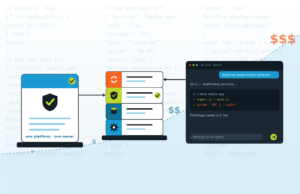
- In one, the connection is really an on-ramp: the content is welcome to stay where it is, briefly, on its way into the vendor’s own store.
- In another, the content genuinely streams without being copied, but only from the vendor’s file system, which you have to adopt first.
- In a third, the vendor installs an appliance beside your storage; it solves for speed while quietly making its own platform the center of gravity. Each of these is honestly described as working with content in place.
In each, the place is theirs. And the moment your content lives in a vendor’s place, you have taken on their economics and their exits.
The plan to move everything to one cloud already lost
This matters now because the industry has just finished learning it the expensive way. The first wave of all-in cloud consolidation has cooled into something more pragmatic. Devoncroft’s analysis found the migration to the cloud effectively stalled in 2025, held up as much by the business case as by the technology. IDC’s Natalya Yezhkova put the broader trend plainly: the “cloud-first, cloud-only approach…is becoming a less prevalent approach,” as the data-transfer fees that “add up” push workloads back toward hybrid.
The reason is not nostalgia for on-prem; it’s business realities. Moving large media files out of a cloud carries recurring egress charges, commonly $0.08 to $0.11 for every gigabyte pulled back out, so a strategy built on gathering everything into a single location becomes a meter that never stops running.
On the Signiant Platform, on average, customers now pull more content out of the cloud than they put in. In late 2024, egress overtook ingress, and it has stayed ahead since, as organizations shifted from net-loading the cloud to net-retrieving and distributing from it.
So what actually creates an advantage? A connection that stays neutral
Here is the reframe I would push: the mess, or “complexity,” is not a failure of discipline. Content ends up scattered, duplicated, and versioned because production is fast and creative, and it will only grow messier. You cannot tidy or centralize your way out of it, so stop trying.
What Signiant sees across the organizations on its platform bears this out: the volume each one moves has climbed about a quarter since 2022, even as the teams moving it have shrunk more than ten percent, and it is heavier files, not more of them. Fewer hands, more content. The alternative is not another destination. It is a connection that is indifferent to where content lives and to which tools you use on it, one that reaches into the storage you already own and lets you keep the applications and AI models you have already bought or built, the LLMs included. You put what you already pay for to work, instead of standing up another stack of tools to secure, govern, and maintain. What that connection has to do is concrete: let you see everything you have wherever it lives, know what each piece is, and act on it where it sits.
And acting on it does not have to mean copying it. The right to act is granular — play a proxy, kick off a job, hand one reviewer a single camera angle — not a blanket handover of the file. Sharing content and losing control of it are not the same thing.
The industry’s standards bodies frame this as the point. MovieLabs, the studios’ technology consortium, argues for interoperability that gives teams the flexibility to “adopt new technologies with less friction and risk”; the DPP’s integration work puts it more bluntly: you are aiming for “velcro, not superglue,” systems you can attach and detach as the work changes, not a stack you are fused to. The same logic now extends to artificial intelligence. As Telestream’s Alan Dabul argues, for AI to be useful “it must work inside the systems teams already use,” with customer media staying under customer control. Rather than hauling a library into whatever platform hosts the model, bring the model to the content.
For an executive, neutrality is not a technical nicety. It is optionality: the freedom to replace one component without unwinding the rest, or to adopt a better model without re-platforming, without paying to move the same asset twice.
The questions to ask anyone who says “connected”
The distinction is easy to test. Before signing, ask four questions and listen for the hesitation. Does my content stay in my storage, or move into yours? Can I use my own tools and AI models, or only the ones you bundle? What will it cost me to leave? And can I replace a single piece of this without breaking the rest? Genuine connection answers all four cleanly. Repackaged centralization does not.
The library that creates value is the one you can reach
Content you cannot reach is not an asset. It is capital sitting still: paid for and idle. The library that actually creates value is the one you can reach where it already lives, worked on with the tools you already trust. That is the standard worth holding any vendor to: not a faster way to move your content into someone else’s place, but a connection you control, reaching your content wherever it happens to be. The rest is relocation with a new name.